

Familiengarten Eberswalde
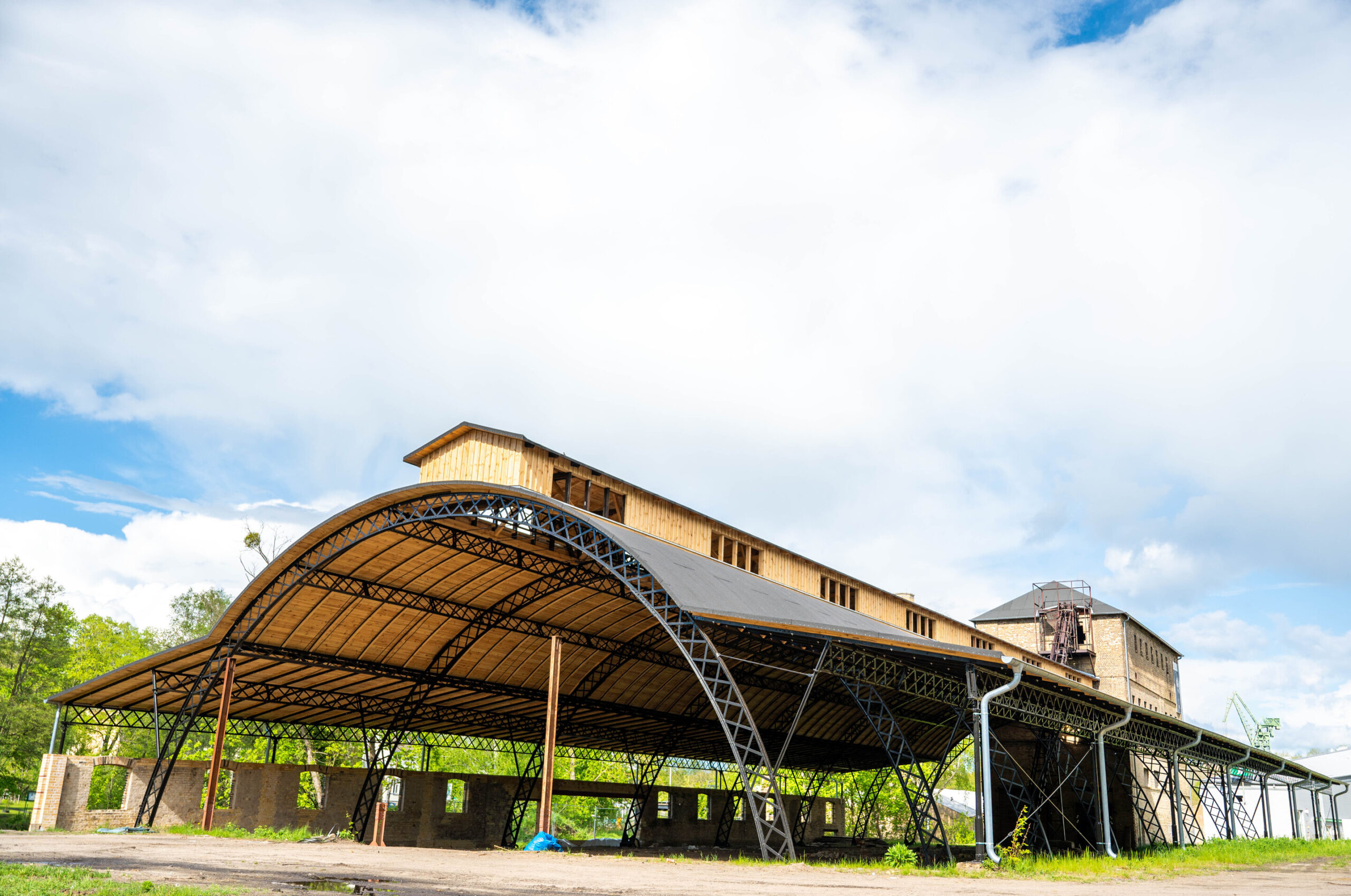
The Borsig Hall in Eberswalde (Borsighalle)
Informationen
The history of the Borsig family uniquely connects industrial heritage, architecture, and garden culture. In Eberswalde, the historic Borsig Hall on the Finow Canal commemorates the outstanding industrialist and locomotive builder Johann Friedrich August Borsig. In Przelewice (Pomerania), visitors can discover the legacy of a later generation of the family, which left behind an extraordinary garden and cultural heritage.
August Borsig – a pioneer of German mechanical engineering
Johann Friedrich August Borsig was born on 23 June 1804 in Breslau (today Wrocław) and died on 6 July 1854 in Berlin. After completing his training at Franz Anton Egells’ New Berlin Iron Foundry, he founded the Borsigwerke company in Berlin-Moabit in 1837.
Through his innovative ideas, Borsig became one of the most important industrialists in Prussia. He gained particular recognition as a locomotive builder. His factory developed into one of the leading mechanical engineering companies and at times held a near-monopoly position in locomotive production.
One of his major technical achievements was the development of large, column-free hall structures that could be extended flexibly and adapted to different industrial requirements.
The Borsig Hall in Eberswalde – a monument of industrial heritage
One of these exceptional constructions is today’s Borsig Hall in Eberswalde. It was originally built between 1847 and 1849 on the site of the Borsigwerke in Berlin-Moabit. The hall was considered a prototype of a modern industrial building: a large, freely usable interior space without supporting columns.
Throughout its history, the structure was relocated several times. After being dismantled in 1899, it was first moved to Berlin-Tegel and around 1900 transferred to Eberswalde. Its new location was at the former Eisenspalterei on the Finow Canal – directly opposite today’s Familiengarten Eberswalde.
Originally, the hall was used for processing scrap iron. After 1945, it served as a storage building, including the storage of steel billets (“Knüppel”), which led to the temporary name “Knüppelhalle”.
Today, the Borsig Hall is regarded as one of the most important industrial monuments in the region. Its structure, consisting of eight iron lattice arches with a span of around 21 metres, impressively demonstrates the technological developments of the 19th century. It became a model for numerous railway stations, factories, and exhibition halls throughout Europe.
The Borsig family in Przelewice – where industry meets garden art
The history of the Borsig family did not end with the death of the company founder. His son and later generations continued the family tradition. A particularly fascinating connection exists with Przelewice in present-day Poland.
August Borsig’s grandson, Friedrich von Borsig (1873–1920), acquired the Przelewice estate at the beginning of the 20th century and created an impressive landscape park with an exceptional plant collection. Under his leadership, Przelewice became a place where science, garden design, and nature were brought together.
The historic Przelewice Park, today known as Ogrody Przelewice, is one of the most valuable garden complexes in Western Pomerania. The Borsig family’s passion for technology, innovation, and creative design found a different expression here: steel and machines were replaced by plant diversity, landscape design, and the connection between people and nature.
A shared history across borders
The Borsig Hall in Eberswalde and the gardens of Przelewice represent two chapters of the same family story.
In Eberswalde, the Borsig Hall stands for the beginnings of modern industrial architecture and the technological progress of the 19th century. In Przelewice, the family legacy continues in the form of a unique garden monument.
Together, both places demonstrate the diverse impact of the Borsig family – from the Industrial Revolution to the creation of cultural landscapes. Today, this shared history connects Eberswalde and Przelewice through European cultural and tourism projects and invites visitors to discover the traces of the Borsig family on both sides of the border.
Overview Map
The Borsig Hall in Eberswalde (Borsighalle)